by Janine Nicole Dennis | Jul 8, 2014 | Featured, Human Resources, Talent Management, Workforce Planning
We have heard of and discussed the many jobs and/or industries that have been either lost or tremendously condensed since 2008. Let’s deal with the tremendously condensed jobs for a second. Due to the financial crisis of 2008, many businesses had to trim the headcount in their organizations. Essentially, the headcount was trimmed, but as expected the work didn’t go away. The result was lots of reorganization within companies and a redistribution of work in support of keeping business going as usual.
As an employee, you don’t want to be seen as not being a team player when asked if you can take on another job or function. It is usually proposed as something temporary and a great help to the organization. The problem is the redistribution continues in many companies and they keep batting their eyes and asking for more and as such employees are now doing the job of not one-but three people.
Boo-hoo-hoo you say…
Yes, it is great to get experience in different areas. It makes you more marketable. It allows you to contribute in many different ways. It may even lead to management seeing you in a new light and possibly considering you for a promotion. The reality is that many are just stuck in a rut. There are no promotions coming their way that they know of. Are they marketable? Maybe to some company, but at the moment they are barely surviving each day trying to handle the multitude of work and demands that have come along with this hybrid role they are in. Contributing is an understatement, they are serving as staff member up to an including executive depending on the project and/or role they are focused on at the moment.
Consequently, sales may look good and dollar signs may make the CEO’s heart flutter, but there is major damage being done to the staff and business. Despite a society in love with doing the most, the truth is we can do only one thing well at a time. If one of your staff members is in charge of branding, recruiting, handling diversity and employee relations -how effective are they being? If they are effective, are they being compensated and rewarded appropriately for their efforts?
If they have been sold the typical- “we can’t raise your salary “bit, they are likely miserable, burnt out and searching for a new gig.
Consider this…
I did a job profile for someone to understand what they do and how they may be marketable within their industry. They happen to have a background in Accounting. However, due to downsizing this person not only handles accounts payable but handles receivables, does journal entries, can add and delete invoices all without any checks and balances. Her job is too cross-functional and she could be robbing the company blind- if she was not a standup citizen. This kind of job overlap with no checks and balances goes against every good accounting principle there is. The person that pays money shouldn’t also receive the money etc.
However, the owner of this business is gleaming, because the work gets done and he is saving on three salaries and maybe four when we consider her total compensation hasn’t been raised or adjusted since taking on this extra work.
I’m not suggesting that there be absolutely no cross-function. A healthy dose of cross-function or job sharing can be helpful in mitigating the impact of temporary or small permanent gaps. That said, anytime the extra work to be taken on amounts to more than 40% time equivalent it is time to hire another person.
Here are some tips to use in evaluating the potential for cross-function:
1) If you must downsize or terminate staff, evaluate the work they did and the time it took them to get it done before you start redistributing. Sometimes you will find unnecessary gaps in turnaround time for tasks and other times work is turned around within reasonable time limits.
2) If the people lost are tied to a significant amount of work, consider utilizing temp staff to pick up the slack even if it for just a few hours a week.
3) If your employees must become cross-functional, be sure there are no conflicts of interest from a legal or ethical standpoint between their current and new roles.
4) Keep communication open and honest. There are times when businesses have to cut back releasing burdens onto employees. If more work is coming and it is temporary, keep your employees informed about your timeline to resume normal operations.
Does this sound like your business? Let us help you put things in perspective? Contact us.
by Janine Nicole Dennis | Jul 1, 2014 | Employment Branding, Featured, HR Innovation
As I take a deep dive into consulting life, I am finding that businesses both big and small are pouring major dollars into digital marketing, social media and branding. The one puzzling thing is when I have conversations with these companies about their business needs for these things all they seem to know is they want and need to be doing it. The issue is the want and need to get involved with these mediums doesn’t always begin with the necessary basics of knowing what your brand is.
You can’t interest people in patronizing your business when you don’t know what you stand for. Why should they support you? What do you offer? More importantly, what is your value proposition? These are not questions you ask yourself after you launch a social media presence.
People need to understand clearly and quickly what you are about and what the call to action is. You may be successful in business, but being able to articulate your value and purpose in this digital age is paramount.
Before you take that directive to engage your audience online-think about the following:
1) What is the brand? In considering what your brand is- think about your niche-what makes you unique in the marketplace. What is your product or service and how does it solve a problem for your customers. These are just some starters to get your branding juices flowing.
2) What resources will you have available to support your digital presence? This means considering who will need to manage this. Will it be managed in-house or do you need to outsource it? You will also need to consider what your budget is.
3) Do your research. It’s imperative that you understand how your target market searches and makes purchasing decisions on products/services like yours. Doing this allows you to meet your consumers where they are and in a way that is most meaningful for them.
4) Once you are clear on one and two, you will need to consider your strategy. Start small and measure the results of your campaigns to gauge what works for you and what doesn’t.
5) Keep it real, engage, and be consistent with how you portray your company on and offline. Any crack or inconsistency in any of these facets of digital marketing and your reputation could suffer.
Here’s another consideration: when customers take to your social accounts to resolve an issue with your product or service- how will you respond? Since transparency is a top concern for most businesses you will have to decide how transparent and actionable you are willing to be to resolve a customer complaint.
Setting out to get involved in social media and branding your company without any idea about why you are there and who you are is like driving a car with faulty brakes- you are bound to crash and burn. Take the time to seriously evaluate the above-mentioned considerations and set yourself up for success rather than failure.
Want more on how you can set your brand up to succeed? Contact us.
by Janine Nicole Dennis | Jun 23, 2014 | Business, Conference sessions, Conferences, Featured, HR Innovation, Human Resources
I was interviewed by a company for a series they were putting together for employers that are looking to attract and retain entry-level candidates. The interview went great and I think I delivered what they expected. However, the interviewer made an interesting comment as I was answering her questions. What she said didn’t surprise me but it did confirm some things I’ve been thinking regarding the usage of buzzwords.
Her comment was ” wow, this is great information- this is what we have been looking for- someone who speaks in plain english rather than using buzzwords.” Of course, flattery will get you every where with me, but clearly she has been searching for someone to tell it like it is without every other word being a buzzword.
In HR, the buzzwords of the moment are “agile” “big data” “thought leader”, “strategic”, “authentic”, “transparency” “human capital” and of course there is your usual dosage of “the seat at the table” talk. There is no question that using buzzwords is addictive. It is in our nature to want to dress up a word so that it sounds-well, more interesting. I have never been an addict of using buzzwords, but I’d be lying if I said I have’nt used them to explain a concept or just for the fun of it. It requires effort to be conscious of what you say and how you say it.
Please don’t kill my vibe- you say?
Based on my conversation with this interviewer, all of you “experts” and “gurus” with your fancy HR language are buzzkill. Yes, I said it- you.are.buzzkill. All of your big data and HR analytics talk that can solve all business issues and increase its agility so in turn, they can finally achieve that coveted seat at the table-is not as welcomed as you may think.
There is nothing wrong with being a conqueror of new HR territory, but do yourself a favor and keep it simple. I don’t mean dumb down your concepts, but I do mean that you need to make sure that the everyday HR practitioner gets what you’re talking about. Oh, and please do not tell me that those aren’t the people you are trying to reach, because if not them who are you speaking to? Who are you convincing to buy-in to your out-of-this-universe concepts and buzzwords? Is it business leaders? Not a chance in hell. You need to resonate with the everyday HR practitioner working in the trenches.
One of my professors in college always said ” a paper written in plain language with the proper grammatical and contextual effects is the most effective paper.” “Papers with floral language and terms that appear over the writer’s head is hardly effective and may even appear as ignorance over intelligence.”
There’s no question that HR has to evolve as the needs of our business partners become more complex and diverse. However, that factor is no reason to further alienate them from the discipline of HR by creating terms, methodology, and concepts that are too difficult to understand.
My interview was successful because I answered her questions in plain language and with practical advice and insights as to how her clients can employ my tips. Instead of saying businesses need to become “agile”, I may have said business leaders need to be able to act and think decisively in order to remain competitive. When I speak about all of the information/data we have available to us regarding the business, I speak about the ways we can make the most out of all of this information and utilizing only the information that makes the most sense for your business. Isn’t that much better than throwing around “big data” every other sentence?
There are HR departments that still don’t know how to properly interpret “time-to-fill” or “cost of hire” reports. That is small data- so they aren’t close to being ready for big data. Are they behind the times? Perhaps, but if business is thriving without big data and the HR department is doing what make sense for that business- none of this high-level talk will ever resonate with them.
For those heading to Orlando for SHRM’s Annual Conference as a speaker or social media influencer, keep in mind that usage of “flavor-of-the-day” buzzwords is impractical. People are spending good money to learn and possibly take some useful HR nuggets home. Do your best not to disappoint them.
Are you ready for a new strategy or way of thinking about how you approach HR? I speak HR and have the tools you need in plain language. Contact me.
by Janine Nicole Dennis | Jun 21, 2014 | Business, Featured, Life, Motherhood, Work/Life
Hey HR Aristocrats! It has been awhile- two months to be exact. As many of you may know, I recently had my third child. With the busy schedule I had at the end of my pregnancy doing speaking engagements, putting things in place both in my day job and business and just being plain tired-it wore down my writing mojo. I had nothing. Everything I thought of I started to pen only to find that I hated the idea and it felt forced. Note: Nothing I have ever written anywhere has been a forced idea. I write from a purely organic place where things inspire me and I feel the need to share my thoughts.
Most will say that it is blasphemous to allow you blog to go dormant for two months, but I really needed to step away and get back to me. A house in shambles, new baby, child in school, another being potty-trained (or so I thought) and a road to recuperation that had me feeling less than inspired were the realities I needed to live with.
Once I walked away, there was inspiration popping up everywhere. Additionally, it allowed me to think and remember that life takes precedence over churning out content. It was never my intention to be a content mill. I just want to write and do things that are meaningful and helpful.
That said, sitting back and enjoying the sight and smell of my new bundle and just enjoying my family allowed me something greater than creating and that was to watch. What I found is that every social media platform is over-saturated with content. There’s a content rat race going on.
Some of it is fantastic and other stuff is just not useful. That said, my evaluation of the social landscape and what I am doing has me prepared to get back to writing but also to explore and further fine-tune some other projects I set out to do. There’s a lot more to me than HR and I am on a mission to pull it all together.
The moral: those of us in business have to be ready to pivot as I mentioned earlier this year. That means remaining open to new or modified ideas, different approaches etc. The beauty of stepping back and learning is so you can become better. I can tell you in two months I have become better just by watching and taking time to get back to me, my interests and life.
I look forward to wooing you all back here for great content and my beautiful journey.
New post drops on Monday, June 23rd and look out for new content from me on the Performance i Create blog on Friday, June 27th.
Oh and I should mention that I have been having a ton of fun with Instagram lately. For pics of me post-partum, my little ones, and a sprinkle of inspiration in pictures follow me on Instagram.
Enjoy the weekend!
CzarinaofHR
by Janine Nicole Dennis | May 21, 2014 | Featured, Guest Post, Human Resources, Work/Life
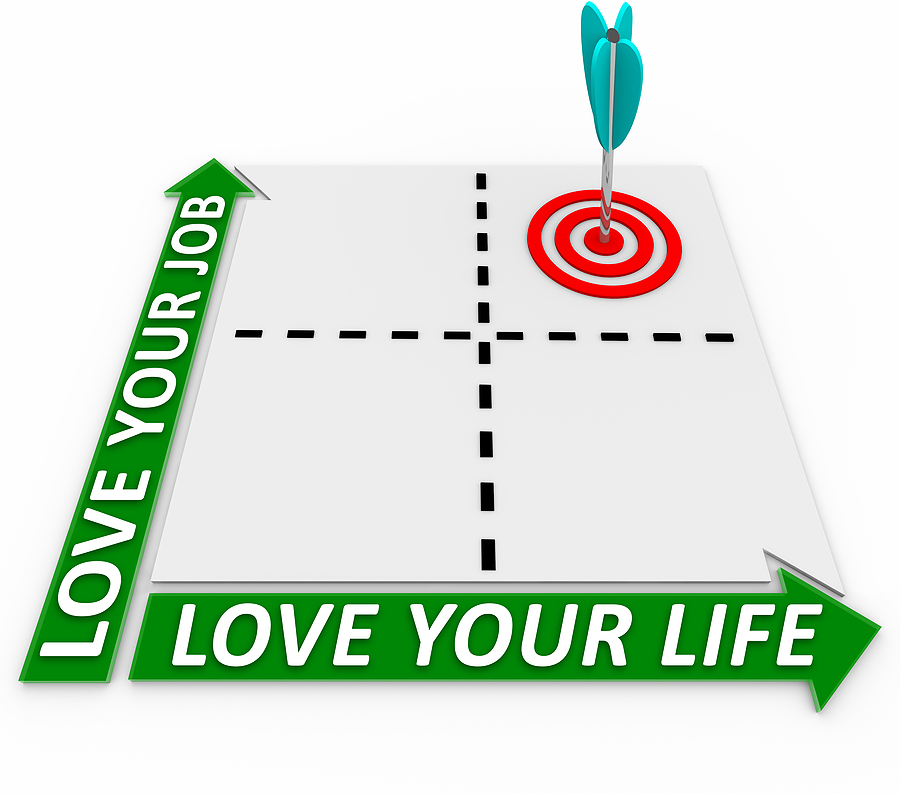
photo credit: Kathy Colaiacovo
Work-Life Balance. Its on the mind of your managers and employees, especially now that we are on the brink of summer. I’ve always thought that people think of “work-life” balance as options for working from home or the freedom to “come and go” as you please. Its really much more than that to me. Its the opportunity to work and recharge at my pace and with some flexibility in regards of what is meaningful to me. While I think that ultimately it is up to the individual to strike the right accord in regards to work-life balance, I do think that HR professionals have a role in helping to set the standard.
Lay the Foundation
Laying the foundation of programs that offer better work life balance and flexibility may be easier said than done. First off, one size does not fit all. We all come from different industries and businesses — half days, working from home, flex schedules, job sharing will not work for everyone. Even within a single organization one option will not work for all jobs. I think that the biggest mistake in starting these types of programs is that managers or HR come up with a list of possibilities for flex programs and find that its poorly received. It could be due to the rollout or the change management — but I think its even bigger than that. Ask your employees what do they want and value. What helps bring balance to them? It may be volunteer time, on site day care, a concierge service — its not always in the bucket of “how do you get people time away from work to do other things.” Several years ago, as recognition of work that I was doing on a large project implementation, I got two weeks worth of prepared meals. Talk about bringing some balance back to my life! The convenience allowed me to put my time and energies elsewhere when I was at home with my family and to this day is one of the best rewards that I’ve received. Not having to get groceries, meal plan, or prepare meals went a long way to my “balance” during that project. If someone had just given me time off, I wouldn’t have gotten the same relief or feeling of balance at that time.
The point is, HR should do a thorough review, including a survey of employees’ desires, to help create a program for managers and employees to follow. One more note — lay the foundation means just that — help get things going, but allow employees and managers actually build the program. It will be much more successful if the program is developed by the people and not just another HR thing. Be a champion of work – life program options.
What are your thoughts on work-life balance and who owns what — does HR still have a role or is it squarely on employees and managers?
Andrea Devers (@thegirlinhr) is an expert in HR Technology, HR process and programs, HR Service Centers, Shared Service, change management, project management, and six sigma. Feel free to connect with her on her blog, The Girl in HR, or follow some of her musings on Twitter.